
Introduction
In 2025, more people are turning to AI Tools for Mental Well-Being as stress, anxiety, and burnout continue to affect daily life. From AI-powered chatbots that offer instant emotional support to smart devices that track stress and sleep, technology is reshaping the way we care for our minds. These tools make mental wellness more accessible, personalized, and affordable — offering support anytime, anywhere. In this guide, we’ll explore the benefits, limitations, and future of AI-driven wellness solutions, and how you can use them to boost your emotional health.
AI Tools for Mental Well-Being: A New Era of Self-Care
Why Mental Well-Being Is a Top Priority in 2025
Modern life isn’t slowing down — and neither is the impact it has on our mental health. According to recent global health reports, more than 40% of adults experience high levels of stress on a daily basis, and 1 in 5 report symptoms of anxiety or depression. These numbers are only growing, as we navigate a post-pandemic world with evolving work models, digital dependence, and social isolation.
Here’s what’s contributing to the pressure:
- Chronic Stress and Burnout
The always-connected lifestyle has blurred the line between work and personal time. Many people feel like they can’t truly “switch off,” leading to ongoing exhaustion and burnout. - Anxiety and Depression
With economic uncertainty, social unrest, and personal health concerns, anxiety and depressive symptoms are more prevalent than ever. - Digital Overload
The average adult spends over 7 hours a day in front of screens. This level of exposure can affect attention span, mood regulation, and sleep quality.
What’s clear is that mental well-being isn’t just about treating mental illness anymore. It’s about proactively building resilience, emotional balance, and psychological flexibility — and that’s where AI-driven solutions come in.
How AI and Digital Tools Are Supporting Mental Health
From AI-powered chatbots to wearable tech, modern tools are helping people take control of their mental health in accessible and often affordable ways. Let’s take a closer look at the key categories.
1. AI-Powered Mental Health Apps
One of the most impactful innovations in recent years has been the rise of AI-enabled mental health apps like Wysa, Woebot, and Replika. These apps use conversational AI to engage users in supportive, human-like dialogues — helping people reflect on their emotions, manage negative thoughts, and practice coping strategies.
Some benefits include:
- 24/7 emotional support
- Guided journaling exercises
- Cognitive Behavioral Therapy (CBT)-based techniques
- Non-judgmental space to express feelings
These tools can be particularly beneficial for those who feel uncomfortable speaking with a therapist or face barriers to traditional mental health care. While they’re not a substitute for therapy, they do offer an accessible starting point for many.
“AI chatbots like Wysa and Woebot are excellent examples of AI Tools for Mental Well-Being that provide instant support and encourage self-care practices.”
2. Meditation and Mindfulness Apps Enhanced by AI
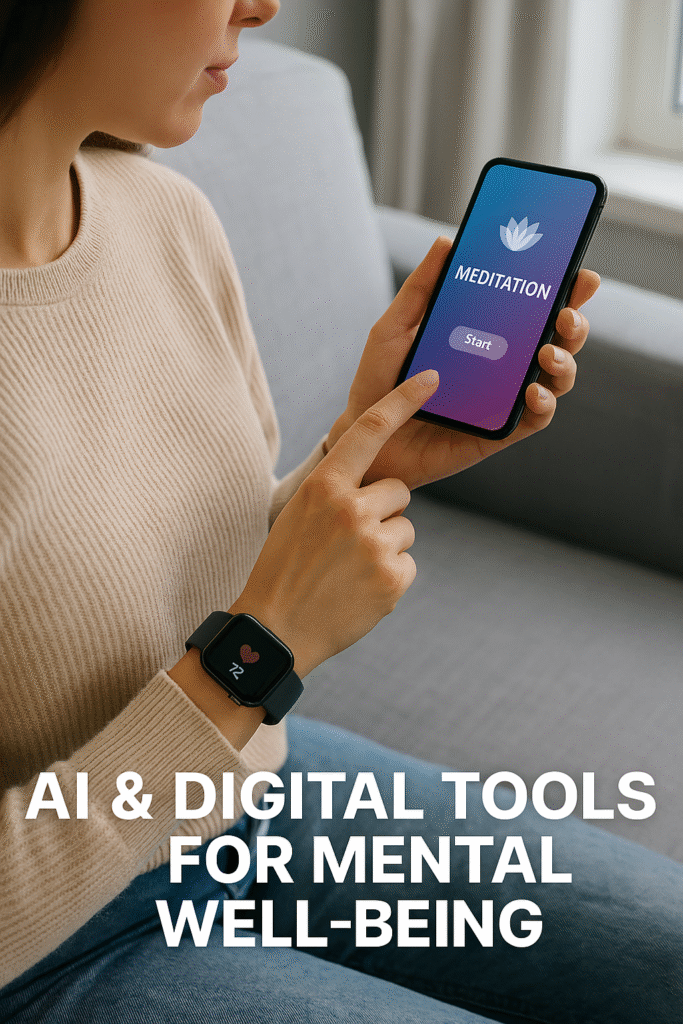
Apps like Calm, Headspace, Balance, and Insight Timer have become go-to resources for people looking to reduce stress, improve sleep, and cultivate mindfulness. Today, many of these platforms are powered by AI that can tailor meditation recommendations based on your usage patterns, emotional state, and even your sleep data.
What these apps offer:
- Personalized meditation plans
- Sleep stories and calming soundscapes
- Real-time breathwork or relaxation exercises
- Daily mindfulness check-ins
Imagine having an app that suggests a 5-minute breathing session after a rough meeting or a calming body scan before bed — based on your behavior patterns. That’s AI at work in a meaningful, therapeutic way.
3. Wearable Wellness Devices
Wearables like the Apple Watch, Fitbit, Garmin, and Oura Ring are no longer just fitness gadgets — they’re now comprehensive wellness companions. These devices track vital signs such as:
- Heart rate variability (HRV)
- Sleep cycles
- Activity levels
- Stress indicators
What sets these wearables apart is the use of AI to analyze behavioral and biological patterns over time, offering insights into when you’re most vulnerable to stress or fatigue. For example:
- If your HRV drops significantly mid-afternoon each day, your device may prompt you to take a mindfulness break.
- If your sleep data suggests poor recovery, it might recommend a shorter workday or extra hydration.
Over time, these insights help create a more proactive approach to managing stress and maintaining emotional balance.
4. Virtual Reality for Mental Health
Virtual Reality (VR) is revolutionizing mental health therapy in immersive ways. Through VR headsets and software, users can engage in experiences that are designed to simulate real-life scenarios or calming environments.
Some common VR-based mental health tools offer:
- Immersive meditation in calming environments (e.g., a virtual forest or beach)
- Exposure therapy for phobias and PTSD
- Social skills training for individuals with anxiety or autism
- VR group sessions to reduce loneliness
The combination of AI and VR enables systems to adjust environments and experiences in real-time based on the user’s physiological responses — like elevated heart rate or eye movement.
This approach can be especially effective for people who are resistant to traditional forms of therapy or need a safe space to process emotions.
The Benefits: Why These Tools Are Gaining Popularity
AI-powered wellness tools are not just a trend — they’re solving real-world challenges. Here’s why they’re becoming essential:
- Accessibility
Support is available anytime, anywhere — even in rural or underserved areas. - Personalization
AI adapts recommendations based on your individual patterns and progress. - Affordability
Many tools are free or much cheaper than traditional therapy. - Consistency
They help build healthy habits by offering reminders, tracking progress, and encouraging daily use. - Data Insights
Long-term data helps you recognize triggers, emotional cycles, and improvement over time.
For busy professionals, students, or parents juggling multiple responsibilities, these tools provide a practical path to consistent mental care.
Limitations and What to Watch Out For
While the technology is exciting, it’s important to acknowledge its limitations:
- Not a Substitute for Clinical Therapy
AI tools are supportive but not equipped to handle severe mental health conditions like clinical depression, trauma, or suicidal ideation. Always consult a mental health professional when needed. - Privacy Concerns
Some apps collect sensitive emotional or health data. Be sure to read privacy policies and choose tools with robust data protection measures. - Screen Time Fatigue
Ironically, wellness apps can add to digital fatigue if overused. It’s important to take offline breaks as part of a balanced mental health strategy. - Over-Reliance on Automation
AI lacks the empathy and contextual understanding that human therapists offer. Use these tools as supplements, not replacements.
- “Apps like Headspace are leading the way in bringing AI-powered mindfulness practices to millions worldwide.”
👉 Link: https://www.headspace.com
How to Choose the Right AI Wellness Tool
With so many options out there, finding the right app or device can feel overwhelming. Here’s how to make a smart choice:
- Check for Scientific Backing
Choose tools that are developed with input from psychologists or backed by clinical research. - Read User Reviews
See what others are saying about usability, accuracy, and effectiveness. - Try Before You Buy
Start with free trials or basic versions to see if the tool works for you. - Look for Customization Options
The more an app can adapt to your lifestyle and preferences, the more useful it will be. - Use in Combination with Human Support
Don’t isolate. Combine digital tools with conversations with family, friends, or professionals for a more holistic approach.
What’s Next? The Future of AI in Mental Health
The future of mental well-being is intelligent, connected, and increasingly empathetic — at least from a tech perspective.
- Emotion-Aware AI
New tools are being developed that can detect emotions from voice tone, facial expression, or typing patterns. - Integrated Health Ecosystems
Digital tools will sync with doctors and therapists, creating more cohesive treatment plans. - Greater Global Reach
AI apps could bring mental health support to areas with limited access to professionals — closing the care gap.
The goal isn’t to replace human connection, but to make mental health care more accessible, personalized, and scalable.
“In addition to digital tools, simple wellness activities to boost your mental health can improve balance and focus.”
Conclusion: A Balanced Approach to Digital Well-Being
“In summary, adopting AI Tools for Mental Well-Being can help individuals reduce stress, improve sleep, and live healthier, more balanced lives.”
DISCLAIMER
This article, “AI Tools for Mental Well-Being,” is for informational and educational purposes only. It is not intended as a substitute for professional medical advice, diagnosis, or treatment. Always seek the guidance of a qualified healthcare provider with any questions you may have regarding your mental health or medical condition.
Some links in this article may be affiliate links, meaning we may earn a small commission if you make a purchase through them — at no extra cost to you. This helps support our content and keeps resources free for our readers.