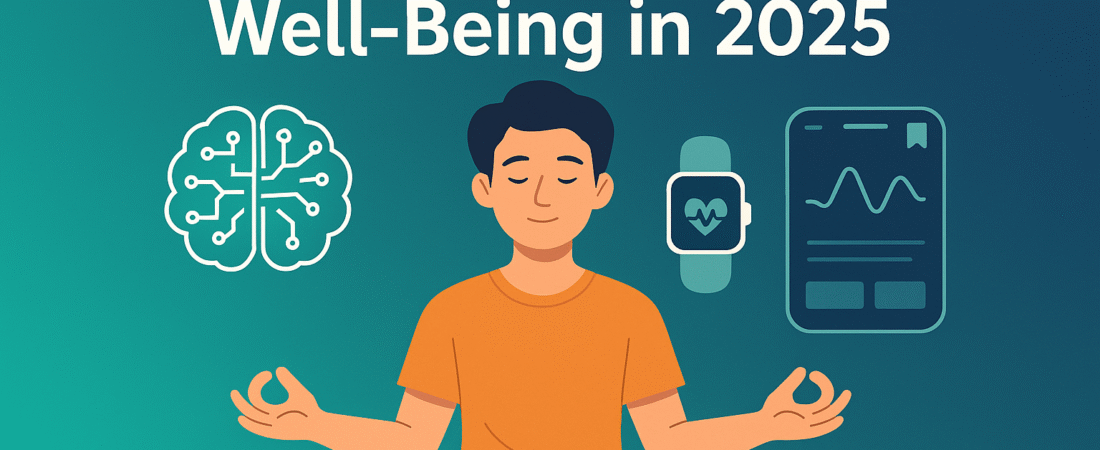
Introduction: AI Meets Mental Wellness
AI tools for mental well-being in 2025,
“Mental health is one of the biggest discussions of our generation. As we navigate working from home, money stress, constant notifications, and tech burnout, millions of us deal with stress, anxiety, and focus on a daily basis.
Artificial intelligence is to the rescue in 2025 in the form of a surprising but potent ally. Mental well-being AI technologies are no longer in the future — they are an actual, practical, and accessible reality. From meditation apps powered on artificial currents to intelligent wearables tracking stress, these technologies are specifically developed to help people lead healthier, saner lives.
Here, we’ll delve into the lowdown on the best 2025 AI mental well-being tools, what they are, how they work, benefits, and things you should consider before you bring them into your practice.”
“AI Tools for Mental Well-Being in 2025 are transforming how people manage stress, improve mindfulness, and achieve healthier lifestyles.”
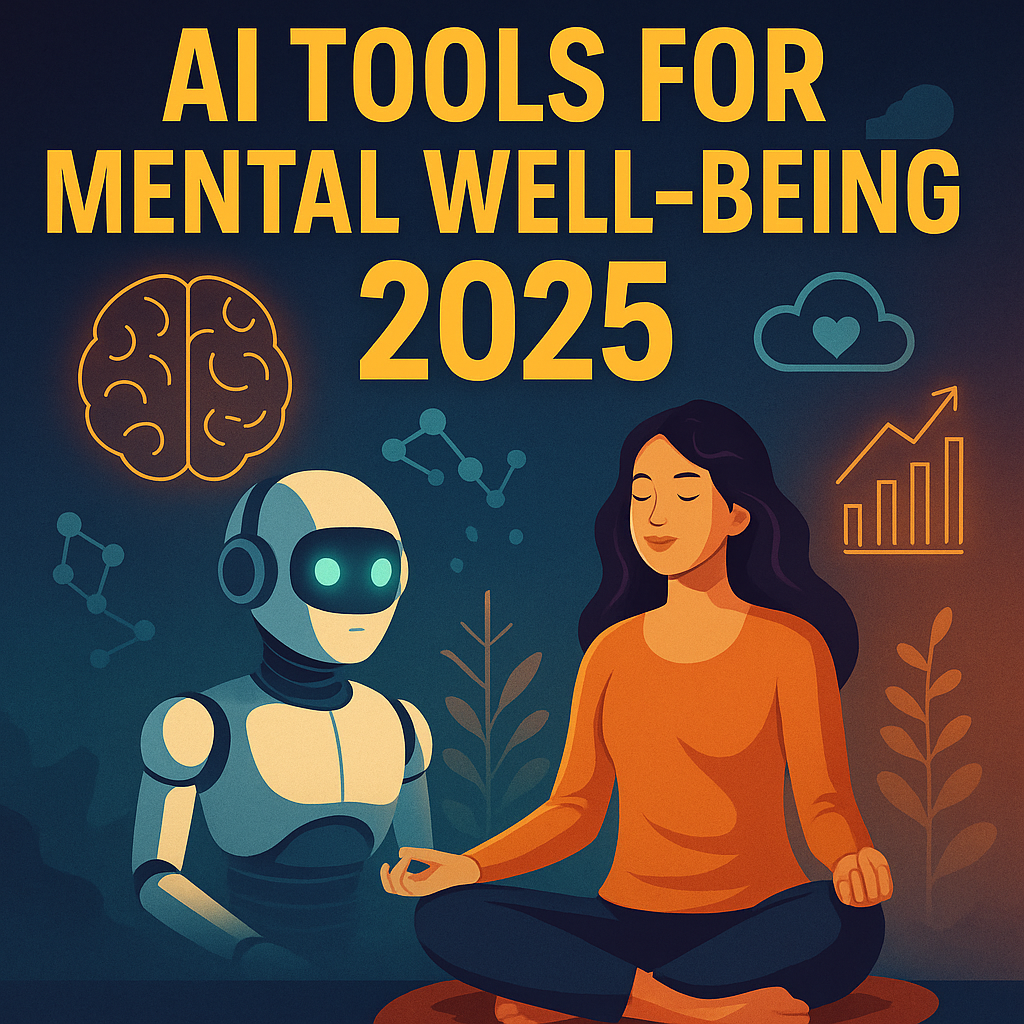
Why AI Tools for Mental Well-Being in 2025 Matter More Than Ever
The World Health Organization estimates that one in four people will experience a mental health condition at some point in their lives. In 2025, the need for proactive mental wellness has never been greater:
- 📈 Rising Stress Levels – Longer working hours and financial uncertainty are fueling anxiety.
- 📱 Digital Overload – Screen fatigue and constant notifications are harming focus.
- 🌍 Global Shifts – Remote work, social isolation, and lifestyle changes are pushing mental well-being to the forefront.
Mental well-being isn’t just about avoiding illness — it’s about resilience, balance, and thriving in daily life. This is where AI-powered wellness tools play an important role.
Best AI Wellness Apps in 2025
1. AI Meditation Apps
Traditional mindfulness apps like Headspace and Calm have integrated AI personalization. Instead of a one-size-fits-all meditation, AI analyzes your stress levels, sleep quality, and habits to recommend tailored sessions.
- Benefit: Guided breathing, calming soundscapes, and personalized meditation.
- Use Case: Busy professionals needing quick stress relief.
2. AI Journaling & Mood Tracking
Apps like Reflectly and Stoic use AI to provide prompts, analyze your writing, and identify emotional patterns.
- Benefit: Helps users recognize triggers and celebrate positive habits.
- Use Case: Students or workers struggling with anxiety or motivation.
3. AI Chatbots for Mental Support
AI-powered chatbots like Wysa and Woebot provide 24/7 support through cognitive behavioral therapy (CBT)-based conversations.
- Benefit: Safe, non-judgmental first-step support.
- Use Case: People seeking quick, accessible emotional guidance.
Smart Wearables for Stress & Focus
1. Stress-Tracking Smartwatches
Devices like Apple Watch, Fitbit Sense, and Oura Ring now feature AI-powered stress detection. Using heart rate variability (HRV), sleep data, and activity tracking, they can alert you when stress is rising and suggest relaxation exercises.
2. Focus-Enhancing Wearables
AI-driven headbands like Muse measure brainwave activity to improve focus and mindfulness.
- Benefit: Real-time biofeedback helps users stay present.
- Use Case: Professionals, creators, and students.
3. AI Sleep Improvement Tools
Smart rings and apps track sleep cycles with AI to provide insights and optimize rest. Better sleep = better mental well-being.
Everyday Benefits of AI Tools for Mental Well-Being in 2025
One of the biggest strengths of AI wellness tools is how seamlessly they fit into everyday life. Unlike traditional therapy or scheduled sessions, these apps and wearables provide support on demand. For example, an AI meditation app can recommend a two-minute breathing exercise right before an important meeting. A smartwatch may alert you to take a break after detecting elevated stress levels during a busy workday.
These micro-interventions, powered by AI, can make a major difference in how people manage stress and stay balanced. Instead of waiting until burnout occurs, AI helps users maintain consistent well-being through small, actionable steps. This is why AI tools for mental well-being in 2025 are becoming an essential part of modern self-care.
According to the World Health Organization’s mental health statistics, one in four people will face a mental health challenge in their lifetime.
Benefits of AI in Mental Wellness
✅ Accessibility – Tools are affordable and available 24/7.
✅ Personalization – AI tailors recommendations to your habits.
✅ Early Detection – AI can spot stress patterns before burnout hits.
✅ Scalability – Millions of people can access support simultaneously.
“How AI Personalization Improves Mental Wellness
Traditional wellness plans are based on generic recommendations. Artificial intelligence revs them up by interpreting personal data — such as sleep patterns, heartbeat, diary entries, and even voice cadence — in a customized way.
For instance, when your sleep on your smartwatch is not good, an app with AI may recommend a short meditation in the morning to help you focus. If stress triggers from your journal data are frequent, AI may suggest taking mindful breaks or breathing at set times. Customization on such a scale makes you feel attended to and heard, drawing you in more with your wellness practice.”
Risks & Challenges of AI Wellness Tools
⚠️ Privacy Concerns – Sensitive data like mood and stress levels must be protected.
⚠️ Over-Reliance on Technology – AI can support mental well-being, but it is not a substitute for professional therapy.
⚠️ Quality Variations – Not all apps are evidence-based; some may provide generic advice.
Who Can Benefit from AI Wellness Tools?
The beauty of these digital tools is that they’re accessible to nearly everyone.
- Students can use AI meditation apps to handle exam stress and improve concentration.
- Remote workers may rely on smart wearables to reduce screen fatigue.
- Parents balancing work and family life can use AI journaling tools to manage emotions.
- Professionals in high-stress industries can benefit from AI-driven sleep tracking for better rest.
Whether you’re new to mindfulness or already practicing self-care, AI tools provide simple yet effective ways to enhance mental health.
How to Use AI Wellness Tools Safely
- Choose apps with clear privacy policies.
- Use AI as a support system, not a replacement for medical care.
- Combine AI tools with offline activities like exercise, journaling, and social connection.
- If symptoms persist, always consult a licensed mental health professional.
The Future of AI & Mental Well-Being
The next wave of AI in mental wellness is likely to include:
- Emotion recognition AI – detecting stress through facial expressions and voice tone.
- Personal AI Coaches – ongoing personalized well-being support.
- Workplace AI Wellness Programs – helping employees manage stress and productivity.
AI wellness tools are becoming more human-like, but the goal isn’t to replace therapists or doctors — it’s to make mental wellness more accessible to everyone.
Balancing Tech With Human Support
It’s important to remember that while AI tools for mental well-being in 2025 offer great benefits, they are not replacements for professional therapy. Instead, they act as supportive companions. For many, these tools serve as an accessible first step toward better mental health — one that can complement counseling, medical treatment, or community support.
The healthiest approach is to treat AI as a guide, not a cure. By combining digital wellness tools with real-world practices like exercise, journaling, and social connection, users can achieve the best results.
If you’re curious about how AI is shaping everyday routines, check out our guide on Everyday AI tools that make life easier.
Conclusion: Everyday AI for a Healthier Mind
AI is transforming how we manage stress, focus, and emotional balance in 2025. With the right apps and wearables, technology can support a calmer, healthier lifestyle.
The key is balance: let AI guide you, but don’t let it control your self-care journey.
👉 Ready to explore these tools in action? Check out our video: AI Tools for Mental Well-Being in 2025 on Everyday AI Mastery YouTube.
⚠️ Disclaimer
This article is for informational and educational purposes only. It is not medical advice. Always consult a qualified health professional for personalized guidance.